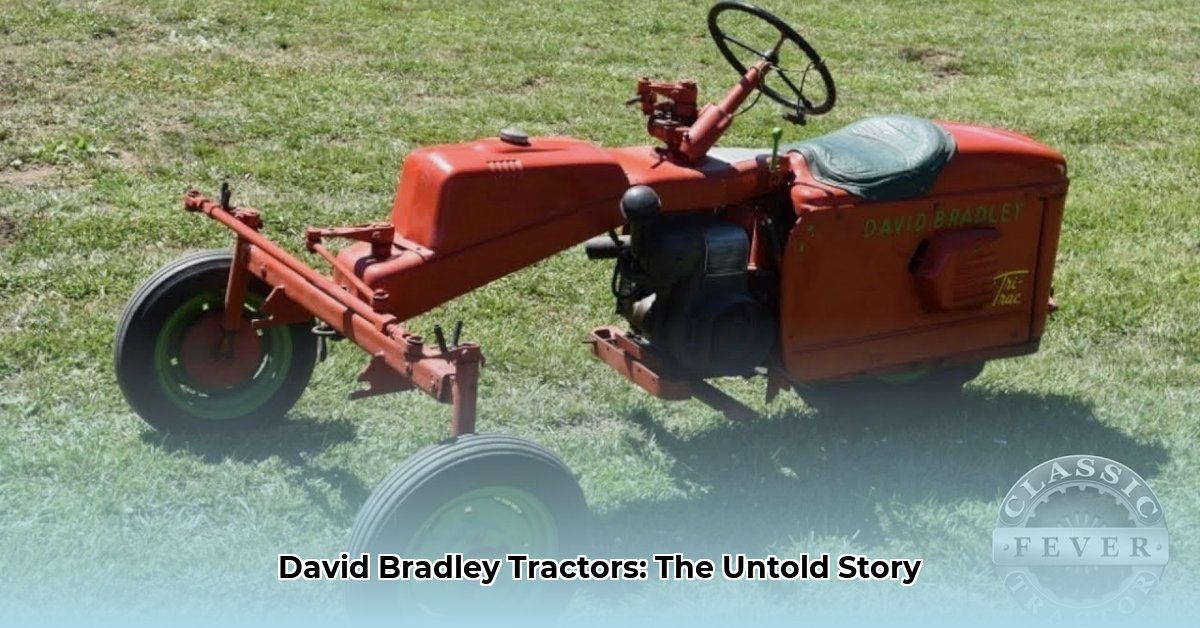
David Bradley tractors represent more than just a chapter in agricultural history; they embody the American spirit of ingenuity and adaptation. Their story, beginning not in a bustling factory but a humble blacksmith shop in 1884, is a testament to the power of understanding the needs of the farmer. This narrative explores David Bradley's journey from crafting simple, yet robust plows to becoming a significant player in the agricultural machinery market, highlighting key innovations, strategic partnerships, and enduring legacy. For more tractor history, check out this website.
From Plow to Powerhouse: The Early Years
The first David Bradley product wasn't a tractor, but a plow—a testament to the company's foundational understanding of farmers' core needs. This wasn't merely a tool; it was the reliable backbone of a farming operation, built to withstand the rigors of the land. This initial success laid the groundwork for expansion, and David Bradley soon broadened its offerings beyond plows, providing a comprehensive suite of farm equipment. This strategic diversification, a hallmark of their approach, allowed the company to become an indispensable resource for farmers of all sizes. This early focus on comprehensive solutions set them apart from competitors. Were these early choices a key to their initial success?
The addition of walk-behind tractors marked a significant milestone. These relatively compact machines proved revolutionary, providing smaller farms access to mechanization previously unavailable. This commitment to innovation, catering to various farming operations, solidified David Bradley’s position within the agricultural landscape. This forward-looking strategy arguably propelled them ahead of the curve. Did their ability to anticipate the evolving needs of farmers account for their lasting impact?
The Sears Synergy: Expanding Reach and Market Share
A pivotal moment arrived with the partnership with Sears, Roebuck and Co. Suddenly, David Bradley's equipment wasn't confined to local hardware stores; it became readily accessible nationwide through the Sears catalog. This strategic alliance dramatically expanded their reach, catapulting them into a new market segment. This collaboration, however, brought about a shift in focus. The production of lawn and garden tools alongside traditional farm equipment created a legacy of debate amongst historians. Did this broadening of product lines dilute the core brand identity, or did it actually expand its reach and strengthen its overall impact on a wider market?
This expansion poses a compelling question—did the Sears partnership ultimately benefit or hinder the long-term trajectory of the David Bradley brand? The answer remains a subject of ongoing discussion among agricultural historians.
A Lasting Legacy Among Collectors: More Than Just Rust and Remembrance
Today, the well-preserved David Bradley tractors are highly sought-after collector's items. These machines are celebrated not simply as relics of a bygone era, but as tangible symbols of American ingenuity and resilience. Their enduring presence in auctions and online markets, such as eBay, is a testament to the quality and enduring appeal of these machines. This compelling collector's market demonstrates the undeniable legacy, and high quality, of David Bradley equipment. What factors contributed to this enduring legacy and appeal to collectors?
Despite the compelling narrative, significant gaps in our understanding remain. Further research into the company's detailed financial records, business strategies, and competitive landscape could significantly enrich our understanding of its success. In-depth research, comparing their strategic decisions with those of their competitors, would illuminate the factors that led to their substantial market presence. A detailed examination of the company’s adaptation to evolving technology over time is critical to fully appreciating their enduring success.
Areas for Future Research: Unearthing the Complete Story
The legacy of David Bradley tractors is intertwined with the broader narrative of American agriculture. Their story is far from complete, however. Areas requiring comprehensive research include:
- Detailed sales figures and market penetration analysis: This quantitative data will provide insight into their market share and competitive positioning. This requires thorough research into archival records and industry reports.
- In-depth competitive analysis: Comparing David Bradley’s business strategies with those of its contemporaries will reveal its strengths and weaknesses compared to other major agricultural machinery manufacturers.
- Analysis of product development and technological adaptation: Examining the evolution of David Bradley tractors through the lens of changing technology would showcase their ability to innovate and adapt to market demands.
The story of David Bradley tractors is far more than just the history of a corporation. It's a reflection of ingenuity, resilience, and the enduring relationship between humanity and the land. It is a story worthy of continued exploration.